
From the Principal's Desk
Classroom teachers are in the process of setting up spring parent-teacher conference schedules. We hope that you will take advantage of this opportunity to review your child’s progress and discuss questions and/or concerns you might have about the remainder of this year.
Please know that we are always open to communication that will enhance your child’s educational experience with us and welcome your questions and feedback at any time.
MARK YOUR CALENDARS:
Wednesday, March 11th - Full School Day, No Early Release
Friday, March 13th - No School, Professional Learning Day
Wednesday, March 18th - Early Release, Parent-Teacher Conferences
Wednesday, March 25th - Early Release, Parent Teacher Conferences
Sincerely, Carol MacArthur
Principal, Grade 4-5
Office Reminders
- Student arrival begins at 8:20 AM.
- School begins at 8:50 AM. If your child arrives after that time, they are tardy and need to check-in at the office before going to the classroom.
- You can report absences, communicate transportation plans or make general inquiries by calling the main office at 829-4815 or emailing [email protected].
We greatly appreciate your attention to these procedures, as they help to ensure that our routines run smoothly and efficiently.
Lost & Found
If you are missing something, encourage your child to take a look at the racks & bins just outside the cafeteria. 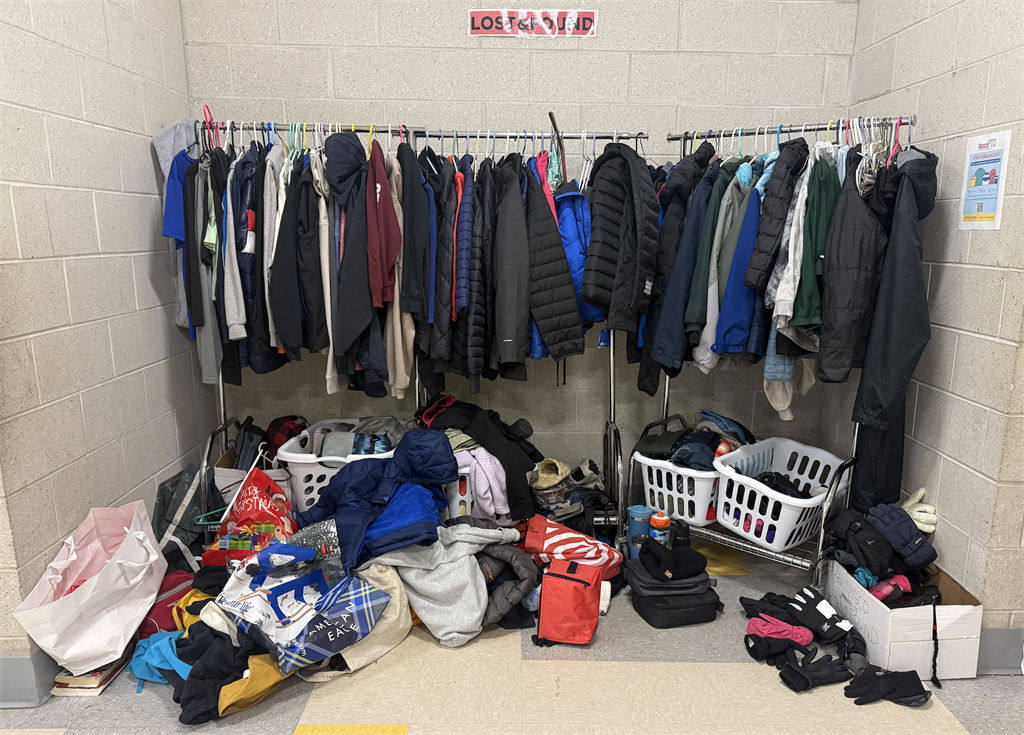
Check This Out!
Now available: The Winter Edition of our school newsletter, The Greely Gazette!
Community Corner
Teamwork
It's great to be able to follow up weeks of Olympic coverage with a focus on teamwork. Hockey, curling, skiing and skating - incredible displays of people working together focussing on one big shared goal. Even individual athletes have a team of coaches, trainers, and supporters behind them, all focussed on their goal.
According to Google, working as a team actively reconfigures students' brains by enhancing flexible thinking, social awareness, and emotion regulation. It drives the release of brain chemicals which build trust and reinforce learning, while building empathy and problem-solving.
Your student is part of many teams: family, sports, classrooms. Each has different goals, roles, and needs. While we focus on teamwork at school, you can look for opportunities to highlight teamwork at home. Making a meal together, house or yard work, planning a weekend picnic or outing, there are many opportunities to work as a team and celebrate the results.
Go team!
Katie Campbell, School Social Worker
Ali Waterhouse, School Counselor
Amy Vincent-Cross, School Social Worker
A Look Into Literacy
We are about halfway through Unit 4 of CKLA! Our 4th and 5th graders have moved past the introductory phase and are now deep into the heart of their respective texts. Here is a look at what’s happening in the classroom right now:
Grade 4: Eureka! Student Inventor
Our 4th graders are exploring the world of innovation. After learning about the spark of an idea, students are now analyzing the grit and process behind famous inventions. They are shifting from researchers to problem-solvers. They will be presenting their inventions and reflecting on the process at the end of the unit.
Grade 5: Adventures of Don Quixote
Our 5th graders are currently riding alongside Don Quixote as he continues his journey. They are deep into the mid-section of Miguel de Cervantes’ novel, where the line between reality and imagination gets very blurry! Students are reading and gathering information for their opinion essays. They are focusing on giving reasons for their opinion, then backing it up with evidence. They will also be doing some more work with vocabulary, subjects, verbs and spelling words.
Check out what is going on at Prince Memorial Library!




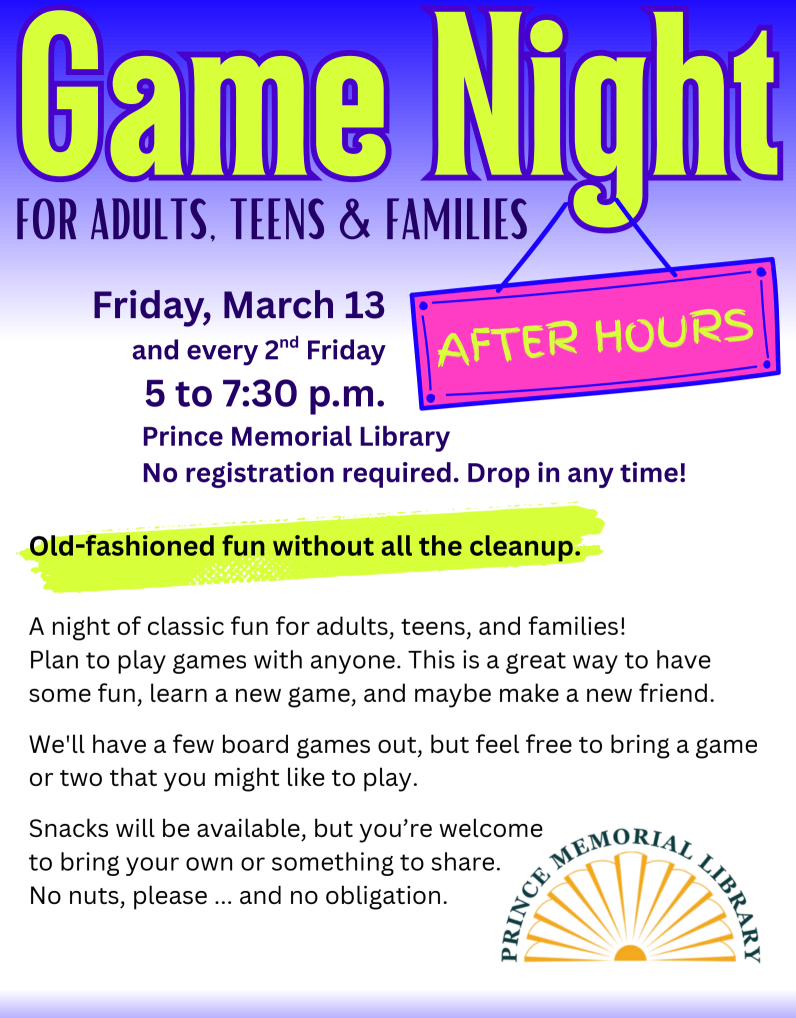

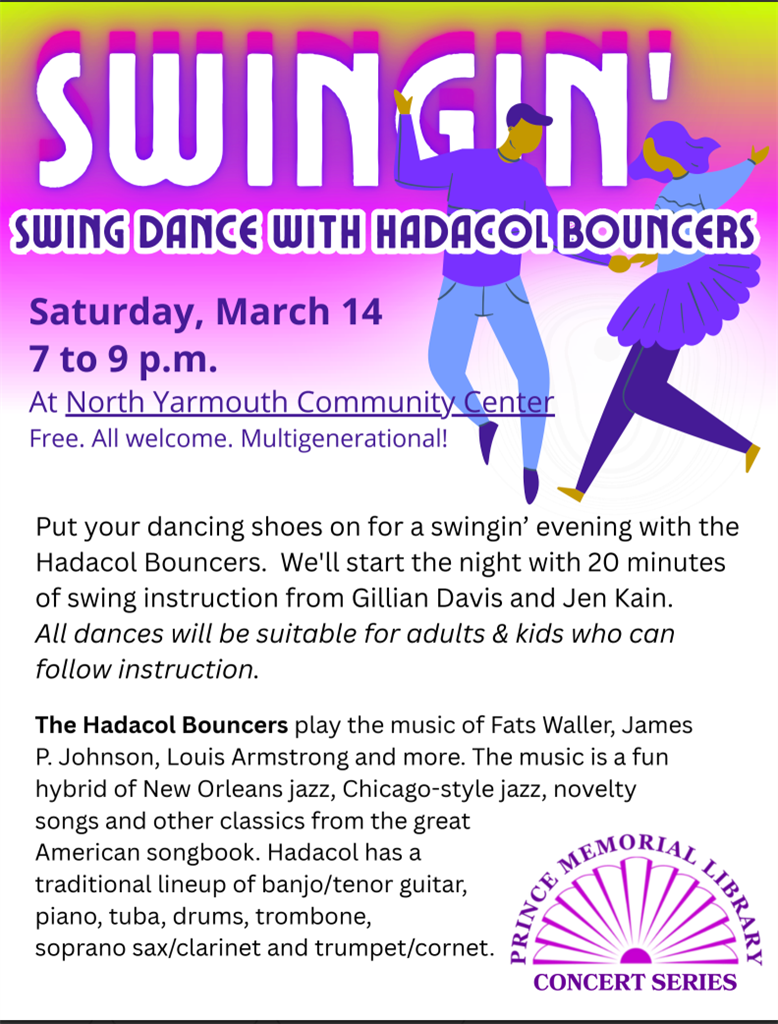

Janet Giguere, Literacy Specialist
Math Matters!
Fourth-grade students are diving into division using a strategy called the partial quotients algorithm. This approach helps students build a strong conceptual understanding of division, rather than just memorizing a rigid sequence of steps.
Instead of analyzing a large number digit-by-digit, students look at the whole number and repeatedly subtract "friendly chunks" using easy multiples of the divisor like 10, 20, or 100, until they reach zero or a remainder. This method gives students the flexibility to rely on the multiplication facts they are most comfortable using.
The breakdown below illustrates how a student might use the partial-quotients method to solve 1,325 ÷ 9. Students begin by asking, "How many groups of 9 are in 1,325?" and make a series of reasonable estimates.
-
First Chunk: A student might recognize that there are at least 100 groups of 9 in 1,325. They subtract a friendly chunk of 900, leaving 425.
-
Second Chunk: Next, they look at the remaining 425 and estimate that there are at least 40 groups of 9. They subtract 360, leaving 65.
-
Final Chunk: Finally, using their basic math facts, they recognize that 7 groups of 9 is 63. Subtracting 63 from 65 leaves a remainder of 2.
-
The Answer: The "partial quotients" for each step (100 + 40 + 7) are added together to reveal the final answer: 147 with a remainder of 2.

Our fifth-grade students are learning how to multiply fractions! Instead of jumping straight into memorizing the standard algorithm (multiplying straight across), we are first building a strong, visual understanding of why fraction multiplication works.
We are exploring two different ways to visualize this math:
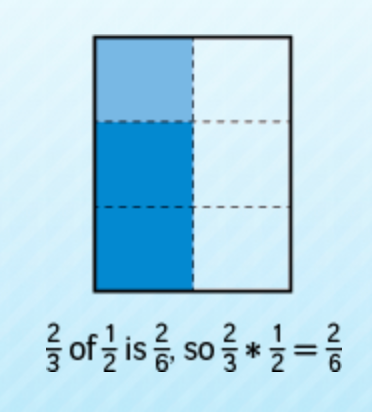
The "Of" Strategy: Finding a Part of a Part - When multiplying fractions, it helps to read the multiplication sign as the word "of." We are essentially finding a fraction of another fraction. Students are using paper folding to see this in action.
For example, to solve ⅔ × ½ (or "two-thirds of one-half"):
-
First, students fold a sheet of paper in half and shade one section to represent ½.
-
Next, they turn the paper, fold it into thirds, and "double-shade" two of those new sections to represent ⅔.
-
When they unfold the paper, they can see that the double-shaded area covers 2 out of 6 total equal parts. Therefore, ⅔ × ½ = 2/6.
The Area Strategy: Measuring Length "By" Width - The second strategy builds on what students already know about finding the area of a rectangle (length × width). We call this the "by" interpretation.
For example, to find the product of ¾ × ⅔, students draw a rectangle that represents one whole unit:
-
They divide the length into fourths and highlight ¾.
-
They divide the width into thirds and highlight ⅔.
-
The overlapping shaded section represents the area. By counting the overlapping parts compared to the total number of parts in the whole rectangle, they can easily find the final product!
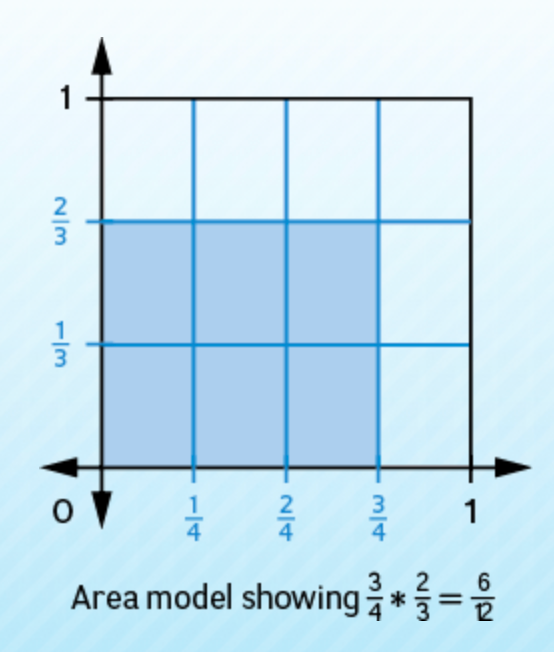
By starting with these visual models, students develop a deep number sense, making the transition to the traditional multiplication rules much more meaningful.
Shannon Peterson, Math Specialist
Library News
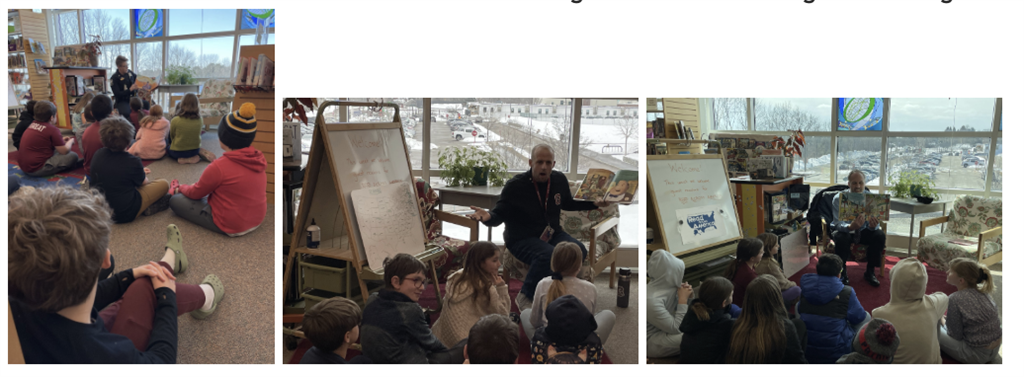
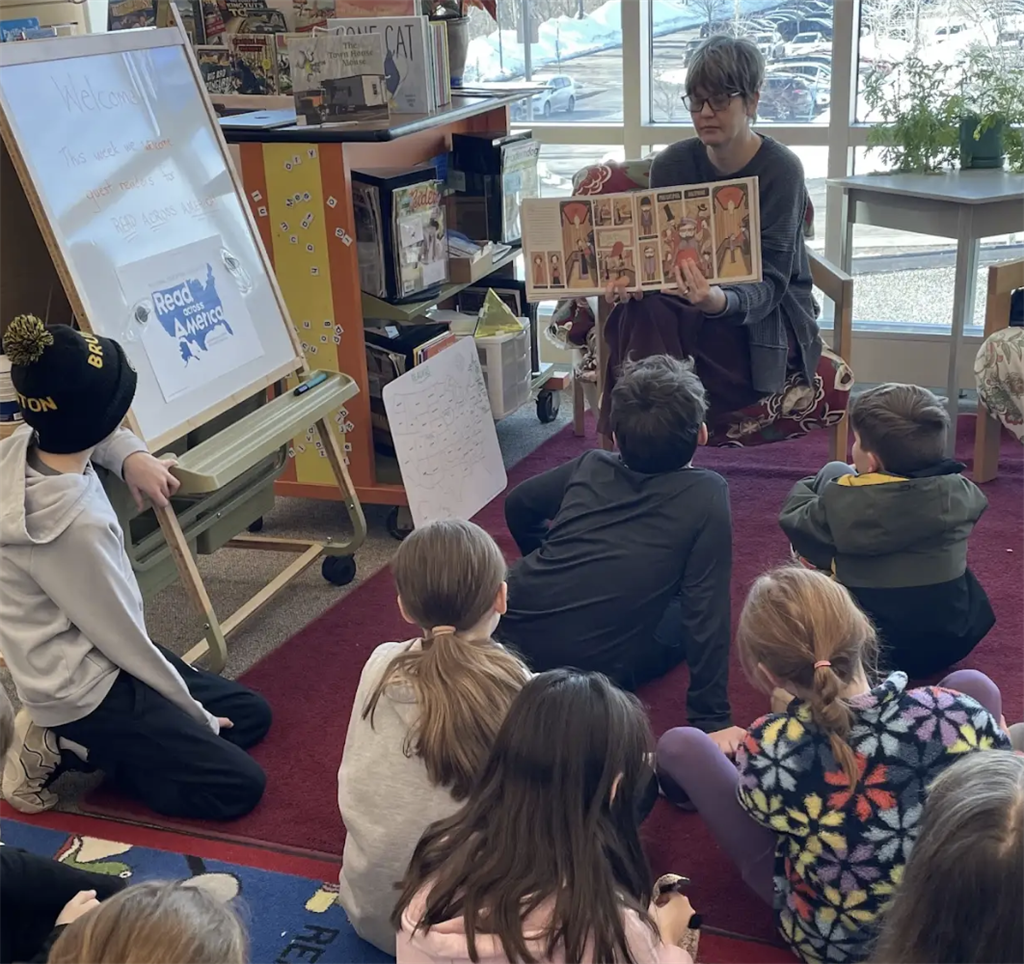
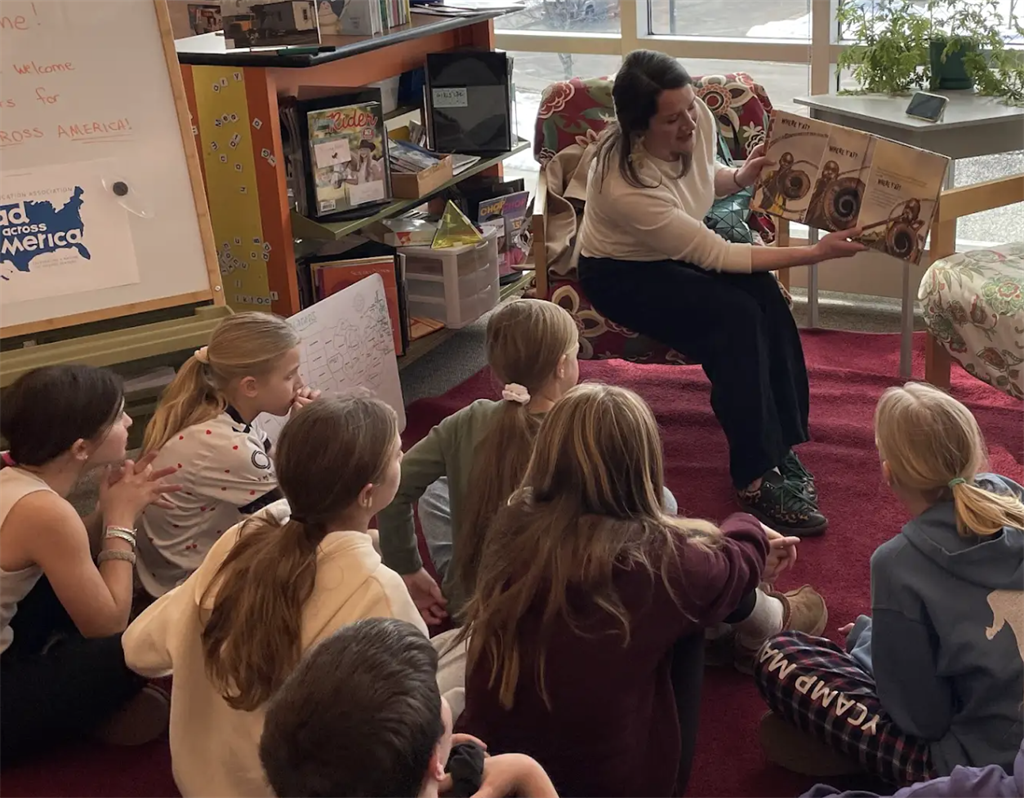
 The Spring Book Fair is coming! Students in 4th & 5th grades will be invited to shop during their Library class 3/20-26. They can also accompany an adult during the Family Events on the afternoons/evenings of conferences (3/18 & 25). FMI- Book Fair website.
 Please sign up to help at the Book Fair- set up, during the fair, or clean up shifts available.
 4th graders have been reading Chickadee Award Nominees all year and are preparing to vote during Library class, along with k-4 students state-wide, at the end of March. All students in grades 4-8 are also encouraged to vote for their favorite MSBA nominated title, as well. Ballots will soon be available on the Library website.
Dorothy Hall-Riddle, 4-8 Librarian
Tips from the Teacher Technology Team
-
Do you need parental controls? What are the options? Do they really work? Here’s everything you need to know about the wide array of parent control solutions, from OS settings to monitoring apps to network hardware. Visit the Parents' Ultimate Guide to Parental Controls on commonsense.org for some really helpful information.
-
From this link, you can also get to parental control articles for specific applications such as




The Late Bus
In addition to regular, daily dismissal, a late bus is also available on Monday, Tuesday, and Thursday for students who stay for co-curricular activities or after-school academic support. Buses pick up students from GMS at 4:15pm and transport them home. Please be aware that depending on the number of students riding the late bus on a given day, your child's arrival time at home may vary. If you have specific questions about the late bus, please feel free to call the Transportation Garage at 829-4820.
Co-Curricular Activities
Monday:
5th grade Band Mr. Barry Saunders [email protected]
Tuesday:
Chorus - Mrs. Jennifer Caton [email protected]
Thursday:
Newspaper Club - Ms. Melissa Fiess [email protected]
5th grade Ukulele Club - Mr. Barry Saunders [email protected]
5th grade Math Team - Mrs. Laurie Poissonnier [email protected]
During the School Day:
Green Team - Mrs. Monica Moore [email protected]
Civil Rights Team - Mrs. Katie Cassessee [email protected], Mrs. Jane Kilbride-Dupuis [email protected], Ms. Molly Russell [email protected]
Stay Connected


